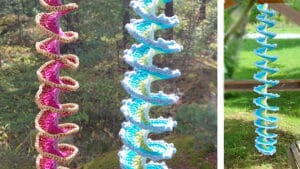
Easy & Beautiful: 10 Different Crochet Stitches to Try Today
Mastering Different Crochet Stitches: Your Ultimate Guide
Welcome to the wonderful world of crochet! Whether you’re a beginner eager to learn the basics or an experienced crafter looking to expand your repertoire, understanding a variety of **different crochet stitches** is key to creating beautiful and diverse projects. This comprehensive guide will walk you through essential techniques, from foundational stitches to intricate textures and shaping methods, helping you master the art of crochet one loop at a time. Let’s dive into exploring **different crochet stitches** that will transform your creations!
Before we begin, watch this helpful video demonstrating some of the stitches:
The Foundation: Single Crochet Stitch
The single crochet (SC) is one of the most fundamental and versatile of all **different crochet stitches**. It creates a dense, sturdy fabric, perfect for amigurumi, bags, or any project requiring a tight weave.
How to Work the Single Crochet Stitch:
- Start with a slipknot on your hook. Chain any number of chains to your desired length, plus one.
- Skip the first chain from your hook. Insert your hook into the next chain.
- Yarn over (YO) your hook and pull up a loop through that chain (you should have two loops on your hook).
- YO your hook and pull through both loops on your hook. Your first single crochet is made!
- Repeat into each subsequent chain across your foundation row.
- To begin a new row: Chain one and turn your work. Insert your hook into the first stitch of the previous row (under both loops of the ‘V’ shape). YO, pull up a loop. YO, pull through both loops. Continue across the row.
After a few rows, your fabric will begin to form a solid, even texture, showcasing the simplicity and effectiveness of this basic stitch.
Mid-Height Marvel: Half Double Crochet Stitch
The half double crochet (HDC) is a fantastic stitch that bridges the gap between single and double crochet. It offers more height than an SC but less density, making it ideal for blankets, garments, and accessories.
How to Work the Half Double Crochet Stitch:
- Start with a slipknot on your hook. Chain to your desired length.
- Option 1 (Turning Chain Does NOT Count as a Stitch): Add one more chain. Skip the first chain from the hook. YO your hook, insert hook into the second chain. YO, pull through the chain (three loops on hook). YO, pull through all three loops on your hook.
- Option 2 (Turning Chain Counts as a Stitch): Add two more chains. Skip the first two chains (these count as one HDC). YO your hook, insert hook into the third chain from the hook. YO, pull up a loop (three loops on hook). YO, pull through all three loops on your hook.
- Continue across the row, working one HDC into each chain.
- To begin a new row: If your turning chain does not count as a stitch, chain one and turn. Work your first HDC into the first stitch. If your turning chain does count as a stitch, chain two and turn. Skip the first stitch and work your first HDC into the second stitch.
This versatile stitch creates a beautiful, slightly textured fabric, adding another essential technique to your repertoire of **different crochet stitches**.
Tall and Flowy: Double Crochet Stitch
The double crochet (DC) is one of the most popular and frequently used **different crochet stitches**. It works up quickly, creates a lovely open fabric, and is perfect for a wide range of projects, from garments to throws.
How to Work the Double Crochet Stitch:
- Make a slipknot. Chain to your desired length, plus three (these three chains usually count as your first DC).
- Skip the first three chains from your hook. YO, insert your hook into the fourth chain.
- YO, pull up a loop (three loops on hook).
- YO, pull through the first two loops on your hook (two loops left).
- YO, pull through the remaining two loops on your hook. Your first double crochet is complete!
- Repeat across the foundation chain.
- To begin a new row: Chain three (counts as a DC) and turn your work. Skip the very first stitch (as your chain three acts as its partner). YO, insert your hook into the second stitch. YO, pull up a loop. YO, pull through two loops. YO, pull through the last two loops.
- At the end of the row, work your last DC into the top of the turning chain three from the previous row.
Textured Details: Front Post Double Crochet Stitch
The front post double crochet (FPDC) creates a raised, textured effect, pushing the stitch forward from the fabric. It’s often used in combination with back post stitches for ribbing and cable designs, adding dimension to your collection of **different crochet stitches**.
How to Work the Front Post Double Crochet Stitch:
- Begin with at least one row of regular double crochet. Chain three and turn your work.
- YO your hook. Instead of inserting into the top of the stitch, you’ll insert your hook from front to back between the first two stitches of the previous row.
- Weave your hook around the back of the second double crochet stitch from the previous row, then bring it back to the front. The post of the stitch should be in front of your hook.
- YO, pull up a loop (three loops on hook).
- YO, pull through two loops. YO, pull through the remaining two loops.
Textured Details: Back Post Double Crochet Stitch
Complementing the FPDC, the back post double crochet (BPDC) pushes the stitch backward, creating a recessed effect. Together, these post stitches are essential for creating ribbed textures among **different crochet stitches**.
How to Work the Back Post Double Crochet Stitch:
- Begin with at least one row of regular double crochet. Chain three and turn your work.
- YO your hook. From the back of your work, insert your hook from back to front between the first two stitches in the previous row.
- Weave your hook in front of the second stitch, then bring it back to the back. The post of the stitch should be behind your hook.
- YO, pull up a loop (three loops on hook).
- YO, pull through two loops. YO, pull through the remaining two loops.
Dynamic Texture: Front Post Back Post Double Crochet Ribbing
By alternating front post and back post double crochet stitches, you can create a beautiful, stretchy ribbed fabric, similar to knitted ribbing. This technique truly highlights the versatility of combining **different crochet stitches**.
How to Work Front Post Back Post Double Crochet Ribbing:
- Start with a row of regular double crochet. Chain three and turn.
- Work one FPDC around the next stitch.
- Work one BPDC around the following stitch.
- Continue alternating FPDC and BPDC across the row.
- For subsequent rows, you will work an FPDC around previous FPDC stitches and a BPDC around previous BPDC stitches to maintain the ribbing pattern.
The Loftiest Stitch: Treble Crochet Stitch
The treble crochet (TrC), also known as triple crochet, is a very tall stitch that creates a loose, open fabric. It’s perfect for lacework, airy garments, or adding height quickly to a project.
How to Work the Treble Crochet Stitch:
- Make a slipknot. Chain any number of chains to your desired length, plus four (these four chains usually count as your first TrC).
- Skip the first four chains from your hook. YO hook twice.
- Insert your hook into the fifth chain from your hook. YO, pull up a loop (four loops on hook).
- YO, pull through two loops (three loops left).
- YO, pull through two loops (two loops left).
- YO, pull through the last two loops. Your first treble crochet is made!
- Repeat across the row.
- To begin a new row: Chain four (counts as a TrC) and turn. Skip the first stitch. YO hook twice, insert into the second stitch. Complete the TrC.
- At the end of the row, work your last TrC into the top of the turning chain four from the previous row.
Shaping Your Work: Crochet Decreases
Decreasing stitches is crucial for shaping your crochet projects, allowing you to narrow rows for things like garment armholes, hats, or amigurumi parts. Learning to decrease in **different crochet stitches** opens up a world of possibilities.
Single Crochet Decrease (SC2TOG):
- Insert your hook into the first stitch. YO, pull up a loop (two loops on hook).
- Insert your hook into the next stitch. YO, pull up a loop (three loops on hook).
- YO, pull through all three loops on your hook. You’ve decreased two stitches into one.
Half Double Crochet Decrease (HDC2TOG):
- YO, insert your hook into the first stitch. YO, pull up a loop (three loops on hook).
- YO, insert your hook into the second stitch. YO, pull up a loop (five loops on hook).
- YO, pull through all five loops on your hook. Two HDC stitches are now one.
Double Crochet Decrease (DC2TOG):
- YO, insert your hook into the first stitch. YO, pull up a loop (three loops on hook).
- YO, pull through two loops (two loops left). (You’ve completed the first half of a DC).
- YO, insert your hook into the next stitch. YO, pull up a loop (four loops on hook).
- YO, pull through two loops (three loops left). (You’ve completed the first half of the second DC).
- YO, pull through all three loops on your hook.
Treble Crochet Decrease (TrC2TOG):
- YO twice, insert your hook into the first stitch. YO, pull up a loop (four loops on hook).
- YO, pull through two loops (three loops left). YO, pull through two loops (two loops left). (First half of TrC done).
- YO twice, insert your hook into the next stitch. YO, pull up a loop (five loops on hook).
- YO, pull through two loops (four loops left). YO, pull through two loops (three loops left). (Second half of TrC done).
- YO, pull through all three loops on your hook.
Subtle Texture: Working into the Back Loop
Working into the back loop only (BLO) of a stitch is a simple modification that can create a unique ribbed texture, adding a subtle touch to your projects. This technique can be applied to many **different crochet stitches**.
How to Work into the Back Loop:
Every crochet stitch has a V-shape at the top, consisting of a front loop (closest to you) and a back loop (further away). Instead of inserting your hook under both loops as usual, simply insert your hook only under the back loop of the stitch. Then, complete your desired stitch (SC, HDC, DC, etc.) as you normally would. This leaves the front loop unworked, creating a horizontal ridge on the fabric.
Alternating Beauty: The Griddle Stitch
The griddle stitch creates a wonderful textured fabric by simply alternating single crochet and double crochet stitches. It’s a great way to add visual interest without complex techniques.
How to Work the Griddle Stitch:
- Make a slipknot. Chain any even number of chains, plus one.
- Skip the first chain. Work one SC into the next chain, then one DC into the following chain.
- Repeat this sequence (SC into next, DC into next) to the end of your foundation row. You should end with a DC in the very last chain.
- Chain one and turn your work.
- For Row Two and subsequent rows: Work one SC into the very first stitch (which will be a DC from the previous row), then one DC into the next stitch (which will be an SC from the previous row).
- Continue alternating SC and DC across the row, always placing an SC into a previous DC, and a DC into a previous SC.
Voluminous Fun: The Puff Stitch
The puff stitch is a delightful, three-dimensional stitch that adds a wonderful pop and texture to your crochet fabric. It’s often used for blankets, scarves, or decorative elements.
How to Work the Puff Stitch:
- Make a slipknot. Chain any multiple of four, plus three (these three chains will count as a DC).
- Skip the first three chains (which act as a DC). Skip the fourth chain.
- To make a Puff Stitch (PS) into the fifth chain: YO, insert hook into the chain, YO, pull up a loop (pull it up to the height of a DC). *YO, insert hook into the same chain, YO, pull up a loop (pull it to the same height).* Repeat from * to * two more times (you should have 7 loops on your hook).
- YO, pull through all 7 loops on your hook. Chain one to “close” the puff stitch.
- Skip the next chain. Work a puff stitch into the next chain. Chain one to close.
- Repeat this sequence across the row. You will usually end with two chains left. Skip the next chain and make a DC into the very last chain.
Working Subsequent Puff Stitch Rows (Staggered vs. Stacked):
- Staggered Puffs: For a staggered look, Chain four and turn. Skip the first stitch and space. Skip the first puff stitch and work your next puff stitch into the chain-one space between the first two puffs from the previous row. Continue working puffs into the chain spaces between puffs.
- Stacked Puffs: For stacked puffs, Chain four and turn. Work your first puff stitch into the top of the previous puff stitch (the loop formed by the ‘closing chain’). Continue working puffs into the top of each puff stitch from the previous row.
Dense and Textured: The Suzette Stitch
The Suzette stitch creates a lovely, dense, and slightly textured fabric by grouping a single crochet and double crochet into the same stitch, then skipping the next. It’s excellent for washcloths, scarves, or sturdy bags.
How to Work the Suzette Stitch:
- Chain any odd number of chains.
- Skip the first chain. In the second chain from your hook, work one SC and then one DC into that *same* chain.
- Skip the next chain. In the following chain, work one SC and one DC into that *same* chain.
- Repeat this pattern (skip one, SC+DC in the next) to the end of your row. You should end by working an SC and DC into the very last chain.
- Chain one and turn your work.
- Skip the first stitch (this will be the top of the DC from the previous row). Work one SC and one DC into the next stitch (this will be the top of the SC from the previous row).
- Continue the pattern: skip the next stitch (DC), work SC+DC into the following stitch (SC).
The Iconic Granny Square
No discussion of **different crochet stitches** is complete without the classic granny square! This iconic motif is incredibly versatile and can be joined to create blankets, garments, bags, and much more.
How to Work a Classic Granny Square:
- Begin with a slipknot. Chain four. Slip stitch into the first chain to form a ring.
- Round One: Chain three (counts as first DC). Work two more DC into the center of the ring. Chain two (this forms your first corner). *Work three DC into the ring. Chain two.* Repeat from * to * two more times (you will have four sets of 3DC and 3 chain-2 spaces). Slip stitch into the top of the beginning chain three to join.
- Round Two: Chain three (counts as first DC). Work two more DC into the chain-two space directly beneath your beginning chain three. Chain one (this is a side space). In the next chain-two corner space, work three DC, chain two, and three DC (this forms your new corner). *Chain one. In the next chain-two corner space, work three DC, chain two, and three DC.* Repeat from * to * twice more. Chain one. Slip stitch into the top of the beginning chain three to join.
- Round Three and Further Rounds: To continue, you will always work 3DC, chain 2, 3DC into the corner chain-two spaces. For the chain-one spaces along the sides, you will work 3DC, then chain one before moving to the next cluster or corner.
 Example of various crochet stitches and textures.
Unlock Your Crochet Potential!
You’ve now explored a wide array of **different crochet stitches**, from the most basic to more decorative and shaping techniques. Each stitch offers a unique texture and drape, opening up endless possibilities for your projects. Experiment with these **different crochet stitches** to create anything from simple dishcloths to intricate garments and beautiful home decor items.
The journey of learning **different crochet stitches** is continuous and rewarding. Practice each one, understand how they behave, and don’t be afraid to combine them in new and exciting ways. With dedication, you’ll soon be confidently creating masterpieces using your growing knowledge of **different crochet stitches**. Happy crocheting!