
The Ultimate C2C Crochet Pattern: Create Stunning Projects Effortlessly
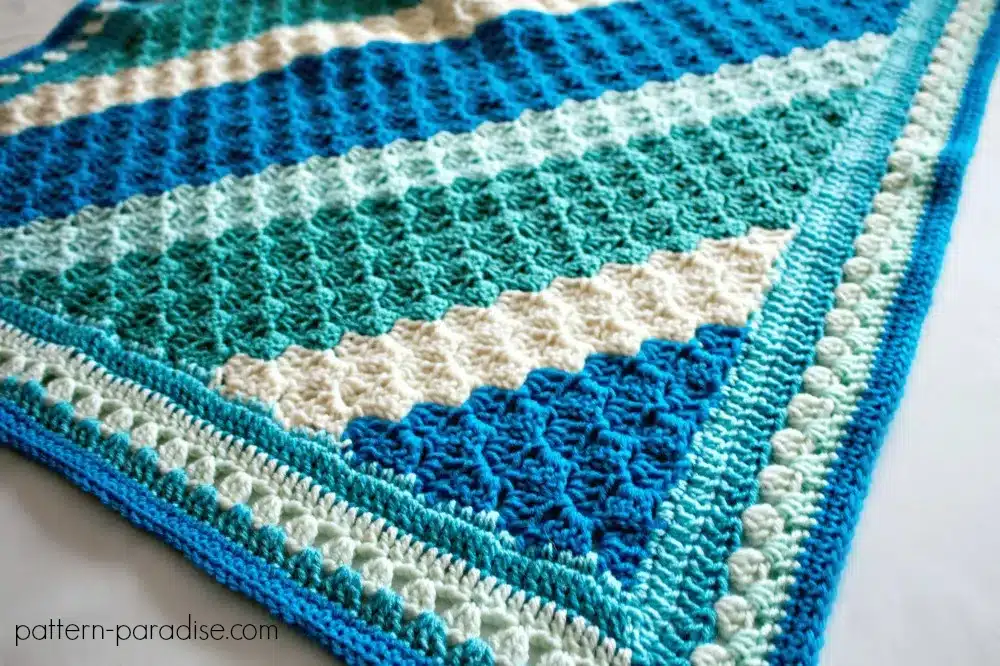
Welcome to the ultimate guide to the Corner-to-Corner (C2C) crochet technique! C2C is a wonderfully versatile and satisfying method that allows you to create stunning, pixel-like designs with ease. Whether you’re a beginner looking for a fast, fun project or an expert wanting to tackle intricate graphgans, this guide has everything you need. We’ll cover the basic stitches, how to increase and decrease, change colors, and read a C2C chart.
What is C2C Crochet?
Corner-to-Corner, or C2C, is a crochet technique where you work in diagonal blocks, starting from one corner of your project and finishing at the opposite corner. Each “block” or “pixel” is typically made of a chain and three double crochet stitches. This method builds fabric incredibly quickly and is the go-to technique for creating “graphgans”—blankets made from a picture or graph.
Why You’ll Love the C2C Technique
- Fast to Work Up: The combination of chains and double crochets creates fabric quickly.
- Visually Stunning: The diagonal texture and pixel-like blocks are perfect for creating images, logos, and geometric patterns.
- Perfect for Graphgans: Easily translate any pixel grid or cross-stitch chart into a crochet masterpiece.
- Meditative & Relaxing: The repetitive nature of creating blocks is soothing and easy to get into a rhythm with.
- Customizable Size: You can stop increasing at any point to create a project of any square or rectangular dimension.
Materials You’ll Need
- Yarn: Worsted weight (Aran, 10-ply) yarn is the most common choice for C2C blankets as it provides a good balance of stitch definition and speed. However, any yarn weight will work!
- Crochet Hook: Choose a hook size that corresponds to your yarn. For worsted weight yarn, a 5.5mm (I-9) or 6.0mm (J-10) hook is a great starting point. Going up a hook size from the yarn label recommendation can improve drape.
- Scissors: For cutting yarn.
- Tapestry Needle: For weaving in ends.
- C2C Graph/Chart (Optional): If you are making a picture blanket, you’ll need a graph where each square represents one C2C block.
Understanding the C2C Basics: The Block Stitch
The entire C2C technique is built upon a single, repeatable element: the block stitch. Once you master this, you can make any C2C project.
The Anatomy of a C2C Block
A standard C2C block consists of: Chain 3, and 3 Double Crochet (dc) stitches. (Note: The very first block is different as it starts from a foundation chain).
The Complete C2C Crochet Pattern Tutorial (US Terms)
This pattern will teach you how to create a square. We will cover how to make a rectangle in the section that follows.
Part 1: The Increase (Growing Your Square)
You will increase on every row until your project reaches the desired width and height.
- Row 1: Start with a slip knot. Chain 6. Working into the chain, dc in the 4th chain from the hook, and dc in each of the next 2 chains. You have now completed your first block. (1 block)
- Row 2: Turn your work. Chain 6. DC in the 4th chain from the hook and in the next 2 chains. Now, locate the chain-3 space on your first block from Row 1. Slip stitch (sl st) into that ch-3 space to join. Chain 3, then work 3 dc into that same ch-3 space. (2 blocks)
- Row 3: Turn your work. Chain 6. DC in the 4th chain from the hook and in the next 2 chains. Sl st into the next ch-3 space (the top of the last block you made in Row 2). Ch 3, 3 dc in that same space. Sl st into the next ch-3 space. Ch 3, 3 dc in that same space. (3 blocks)
To continue increasing: Repeat the process from Row 3. Each row will increase your block count by one. Continue until your project is as wide as you want it to be.
Part 2: The Decrease (Starting the Second Half of a Square)
Once your square’s sides are the desired length, you’ll begin decreasing to create the remaining two corners.
- Decrease Row 1: Turn your work. Instead of chaining 6, you will sl st across the top of the 3 dc of the last block you made. This brings you to the first ch-3 space. Chain 3, work 3 dc in that ch-3 space. Continue with the (sl st, ch 3, 3 dc) pattern across the row until you reach the last ch-3 space. Work your final (ch 3, 3 dc) block in that space. DO NOT make a block on the side of the final block. Simply end the row and turn. Your block count has now decreased by one.
- Continue Decreasing: Repeat the decrease row instructions. You will sl st across the first 3 dc of each row to move inwards, and you will not work into the side of the last block. Each row will have one less block than the previous row.
Continue until you are left with just one block. Fasten off and weave in your ends.
How to Make a Rectangle
A rectangle is made by combining increase and decrease rows.
- Phase 1 (Increase): Increase as you would for a square until the shortest side of your desired rectangle is complete.
- Phase 2 (Maintain Width): On the next row, decrease on one side (by slip stitching across the first block) and increase on the other side (by chaining 6 as usual). Continue this “decrease on one side, increase on the other” pattern for each row. This will keep your width the same while adding length.
- Phase 3 (Decrease): Once the longest side has reached the desired length, begin decreasing on both sides of every row, just as you would for a square, until you reach the final corner.
Mastering C2C: Essential Skills
How to Change Colors
Changing colors is key to creating images. The trick is to do it in the stitch before you need the new color.
- Work the last double crochet of your current color block until the final step. You will have 2 loops left on your hook.
- Drop the current color.
- Yarn over with your new color and pull it through the remaining 2 loops on the hook to complete the double crochet.
- Slip stitch into the next block’s ch-3 space with the new color and continue your pattern.
How to Read a C2C Graph
Most C2C graphs are read on a diagonal.
- Start at a Corner: Most patterns start in the bottom-right corner.
- Read Diagonally: Read the rows of squares diagonally. Row 1 is the single square in the corner. Row 2 is the diagonal row of two squares next to it, and so on.
- 1 Pixel = 1 Block: Each colored square on the graph represents one C2C block of that color.
- Follow the Path: You will work back and forth in diagonal rows, following the color changes on the chart precisely.
Frequently Asked Questions (FAQ)
- What is the best yarn for a C2C blanket?
- Worsted weight acrylic yarn (like Lion Brand Vanna’s Choice or Red Heart Super Saver) is a popular and trusted choice. It’s affordable, durable, and comes in a huge range of colors, which is perfect for graphgans. For a softer, more premium feel, consider merino wool or a cotton blend.
- How do I figure out how much yarn I need for a C2C project?
- The best way is to create a 10×10 block swatch with your chosen yarn and hook. Then, weigh the swatch. You can use this weight to calculate the total yarn needed for your project’s total block count. There are also online C2C calculators that can help with this estimation.
- Can I use a different stitch for C2C?
- Absolutely! For a denser fabric with smaller “pixels,” you can use the Mini C2C stitch. This version uses Half Double Crochet (hdc) stitches. The pattern is adjusted to: Chain 5 to start a row, and each block is a (ch 2, 3 hdc).
- My C2C project has holes. How can I fix this?
- Gaps can be caused by loose tension or a hook that is too large for the yarn. The Mini C2C (hdc) method naturally creates a denser fabric with smaller holes. You can also try going down a hook size to tighten your stitches.