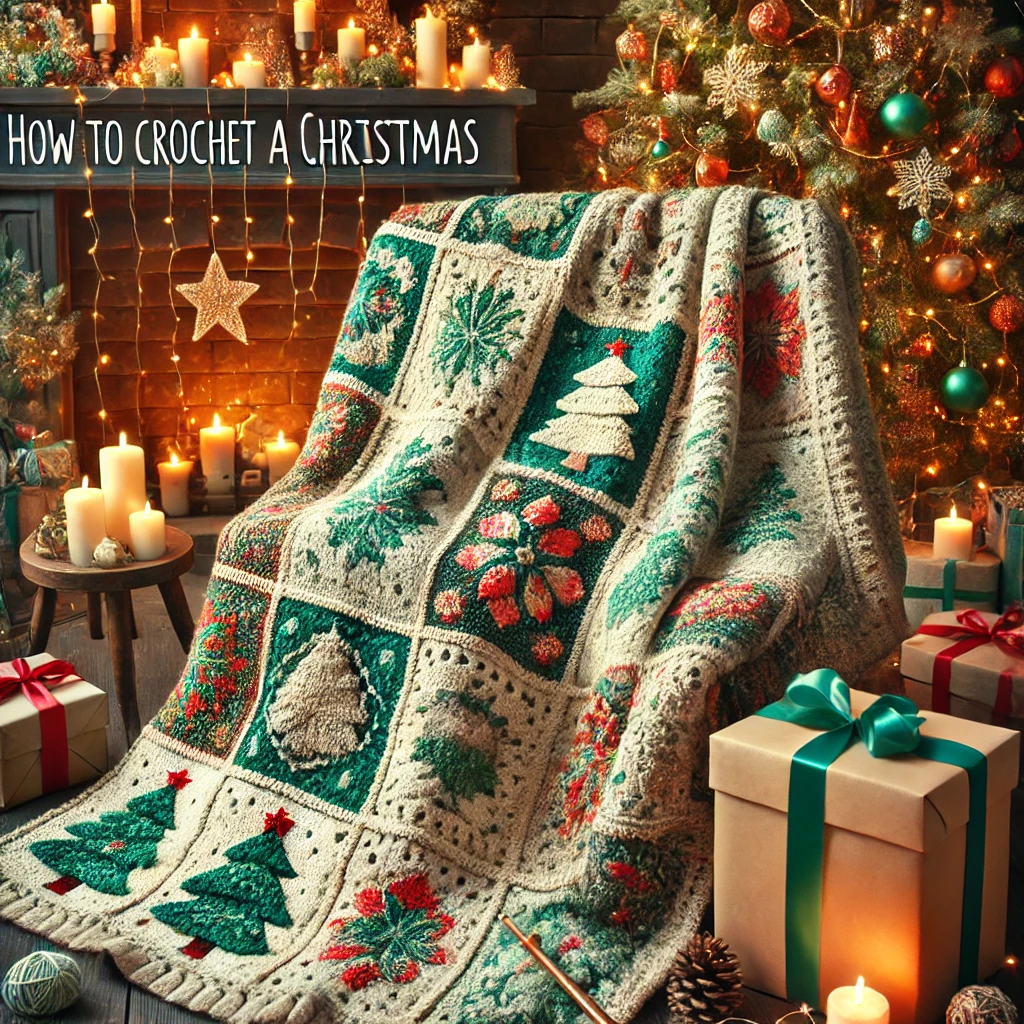
Cozy Free Mile-a-Minute Crochet Pattern
If you have ever wanted a blanket that looks like you spent weeks obsessing over every stitch, but you also want something you can pick up and put down without losing your mind. This is that.
Mile a minute crochet is basically the cheat code for cozy blankets. You make small pieces, join them as you go or later, and suddenly you have this big, drapey, squishy throw that people assume is complicated.
It is not complicated. It is just steady. And kind of addictive, honestly.
In this post I am sharing a cozy, free mile a minute crochet pattern that works great for a throw, baby blanket, lap blanket, stash buster, couch situation, whatever. You can make it in one calm neutral color or go full scrap chaos. Both look good. Weirdly.
What is mile a minute crochet, exactly?
Mile a minute is a blanket construction method where you crochet strips or blocks, then join them to create the final blanket.
The big wins:
- You do not have to wrestle a giant blanket the whole time.
- It is travel friendly. Toss a strip in your bag.
- You can stop at the end of any strip and feel like you finished something.
- It works great for using leftover yarn.
- If you mess up, you are ripping back a strip, not an entire blanket.
Traditionally, mile a minute blankets are built from small motifs that are joined into strips. For this cozy version, we are going to do a super simple block motif that joins into strips, then the strips join together. It gives a soft, textured look without being lacy or holey.
So yes, cozy. Actually warm.
The vibe of this pattern
This is one of those patterns where the fabric ends up feeling thicker than you expect, but still flexible. Not stiff. Not like a rug.
It has a simple raised texture from a stitch pattern that is beginner friendly but not boring. You can watch a show while you make it. You will still have to count a little, but not the kind of counting that makes you hate your life.
Also, the joining is clean. I am picky about that.
Skill level
Beginner to easy intermediate.
If you can do:
- chain
- single crochet
- double crochet
- slip stitch
You can make this.
And if you have never joined motifs before, this is a good one to start with because the joins happen in predictable places and you can see what you are doing.
Finished size
You choose. That is the whole point.
But to give you something concrete:
- Baby blanket: about 30 x 36 in
- Lap throw: about 40 x 55 in
- Couch throw: about 50 x 65 in
- Twin-ish: about 65 x 90 in
This pattern is made from blocks joined into strips, then strips joined into the blanket. You will decide how many blocks per strip and how many strips.
I will give you a planning cheat sheet later so you do not have to guess.
Yarn recommendations
Cozy blankets depend on yarn choice more than anything. The stitch pattern matters, but yarn is the mood.
Best yarn types for cozy factor
- Worsted weight acrylic: easy care, budget friendly, soft options exist now, washes well.
- Worsted weight cotton blend: heavier, breathable, great stitch definition, a little less drape sometimes.
- Chunky weight: faster blanket, extra plush, but can get heavy.
- Soft premium acrylic or acrylic blend: my usual pick for throws.
How much yarn do you need?
It varies by blanket size, yarn weight, hook, and how tight you crochet. But rough estimates for worsted weight:
- Baby blanket: 900 to 1300 yards
- Lap throw: 1400 to 2000 yards
- Couch throw: 2200 to 3200 yards
If you are using scraps, do not stress. Just keep adding. The mile a minute style is very forgiving.
Hook size
For worsted weight yarn, start with 5.0 mm (H/8) or 5.5 mm (I/9).
If you crochet tight, go up a size. If you crochet loose, go down. You want fabric that feels soft and flexible, not stiff.
Notions
Nothing fancy:
- scissors
- yarn needle (for weaving in ends)
- stitch markers (optional but helpful)
- measuring tape (optional, but useful if you are trying to hit a specific size)
For more detailed guidance on the essential tools needed for your crochet projects, refer to this comprehensive guide.
Abbreviations (US terms)
- ch: chain
- sl st: slip stitch
- sc: single crochet
- dc: double crochet
- sp: space
- st: stitch
- rep: repeat
- rnd: round
Notes before you start
- Blocks are worked in joined rounds. You will join each round with a slip stitch, then chain to start the next.
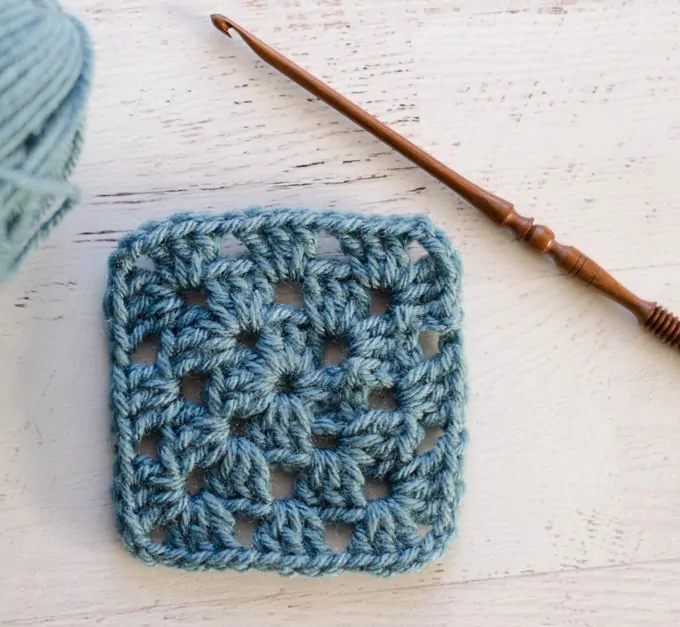
- The blocks are square motifs that have a soft textured center and simple corner spaces.
- You can join blocks as you go (my preference) or join later.
- Turning is not required because we are working in rounds, but you can turn at the end of each round if you want a slightly more balanced look. Optional.
Ok. Let us make this thing.
This is the core piece. Once you can make one block, you are basically done. Then you just make a lot of them. Which sounds intimidating, but it is the good kind of repetitive.
Block size
With worsted yarn and a 5.5 mm hook, each block is usually around 5.5 to 6.5 inches square, depending on tension.
That means for a 50 inch wide throw, you might have around 8 or 9 blocks across. But we are joining in strips, so you will think in strips.
Block Stitch Pattern
The block has:
- a small center
- textured rounds using a simple dc cluster style (but still easy)
- corner spaces for joining
Special stitch: dc2tog (double crochet two together)
If you already know it, great. If not, here is the quick version:
- Yarn over, insert hook, pull up a loop, yarn over, pull through 2 loops (you have 2 loops left on hook)
- Yarn over, insert hook into next stitch, pull up a loop, yarn over, pull through 2 loops (you have 3 loops on hook)
- Yarn over, pull through all 3 loops
That is it.
It creates a gentle texture without being bumpy or holey.
Block Instructions
Rnd 1
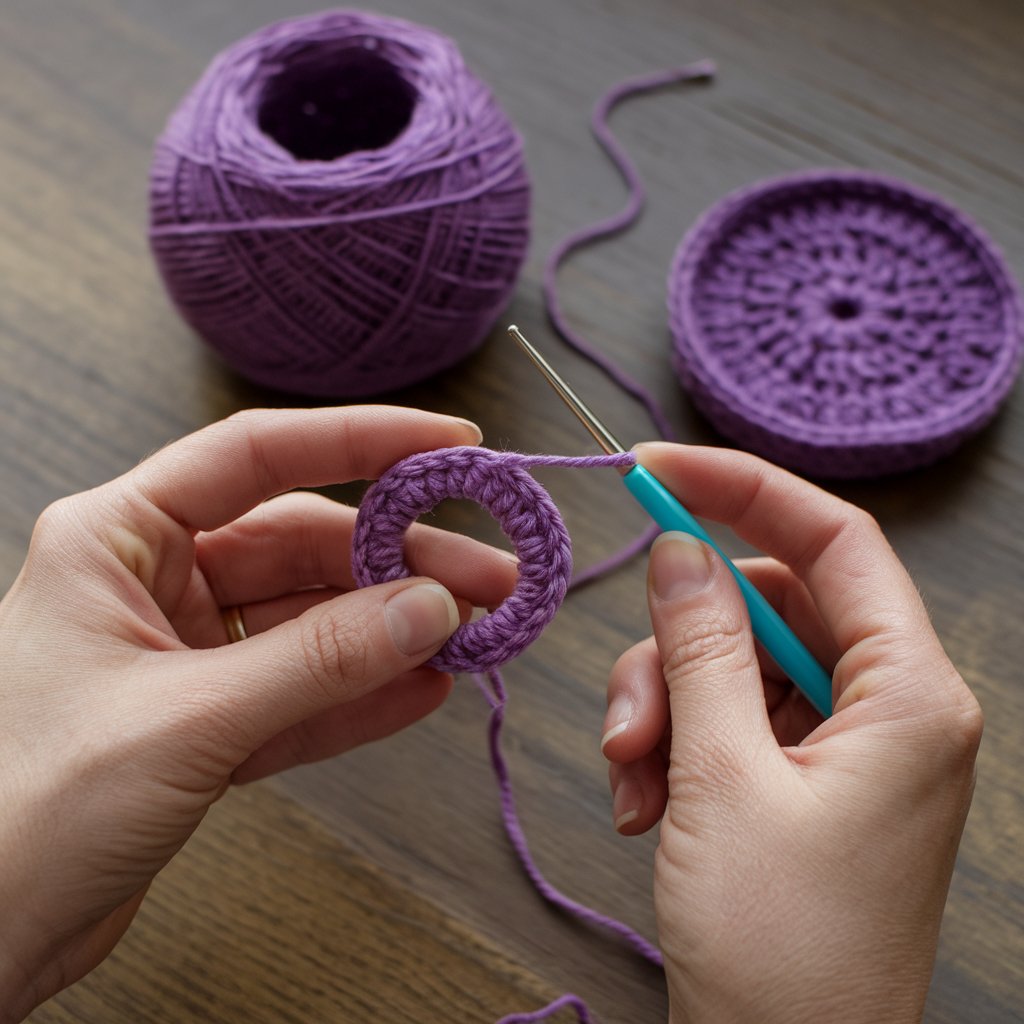
Make a magic ring, or ch 4 and join to form a ring.
Ch 3 (counts as dc), work 11 dc into ring. Join with sl st to top of beginning ch 3. (12 dc)
Rnd 2
Ch 2 (does not count as a stitch). Work dc2tog over first 2 stitches, ch 1.
Repeat around: dc2tog over next 2 stitches, ch 1.
Join with sl st into first dc2tog. (6 dc2tog groups, 6 ch 1 spaces)
You should see little paired stitches forming. Texture starts here.
Rnd 3
Ch 3 (counts as dc). In the same space (the ch 1 sp), work 1 dc.
In next ch 1 sp: 2 dc. Repeat around.
Join with sl st to top of beginning ch 3. (12 dc)
So now you are back to 12 stitches, but the texture below stays.
Rnd 4 (Create corners)
Ch 3 (counts as dc), dc in next st.
In next st, work: (2 dc, ch 2, 2 dc) all in the same stitch. This is your first corner.
Dc in next 2 sts.
In next st, work (2 dc, ch 2, 2 dc).
Repeat this pattern around: 2 dc between corners, corners in every 4th stitch.
Join with sl st to top of beginning ch 3.
At this point it starts looking like a square, not a circle trying to be a square.
Rnd 5 (Build the square)
Sl st into next dc until you reach the first corner ch 2 sp.
In corner ch 2 sp: (2 dc, ch 2, 2 dc).
Along the side: dc in each dc until next corner sp.
In each corner sp: (2 dc, ch 2, 2 dc).
Join with sl st to first dc.
Rnd 6 (Texture round)
Sl st into the corner ch 2 sp.
In corner sp: (2 dc, ch 2, 2 dc).
Now along the side, we do a simple texture:
Work dc2tog over next 2 dc, ch 1 across the side until you reach the next corner sp. You should end with a dc2tog right before the corner, but if your stitch count lands slightly different due to tension, do not panic. Keep it consistent from block to block.
In the next corner sp: (2 dc, ch 2, 2 dc).
Repeat for all 4 sides. Join with sl st to first dc.
Rnd 7 (Final round, clean edge)
Sl st into corner sp.
In corner sp: (2 dc, ch 2, 2 dc).
Along each side: dc in each stitch and in each ch 1 space (place 1 dc into the ch 1 sp). This smooths everything out and makes joining easier.
Repeat around, working corners as (2 dc, ch 2, 2 dc).
Join, fasten off, weave in ends.
That is your block.
Make one. Then make another. Then suddenly you have twelve and you are like, wait, when did that happen.
You have two options:
- Join as you go (recommended)
- Make all blocks then join later
Joining as you go keeps the pile under control and it feels satisfying. So I will explain that method first.
Join as you go: block to block (into a strip)
You will make a strip that is, say, 8 blocks long. Or 10. Whatever your blanket needs.
Step 1: Make the first block
Complete the block as written. Fasten off.
Step 2: Make the second block, join on final round
Work Rnds 1 through 6 the same.
On Rnd 7, when you reach the side that will touch the first block, you will join in the corner spaces and side stitches instead of chaining and stitching normally.
Joining at the corners
When you reach a corner where you would normally do ch 2, instead do ch 1, sl st into the matching corner ch 2 space of the first block, ch 1.
Joining along the side
When you would normally dc into stitches along the shared edge, you have two options:
- Slip stitch join: slip stitch to the corresponding stitch on the other block for a tighter, flatter join.
- Single crochet join: insert hook through your stitch and the matching stitch on the other block, then sc to join. This gives a slightly thicker seam but feels sturdy and sits nicely.
Then continue around and finish the block. Now your blocks are connected. Keep adding blocks to extend the strip.
Joining strips to each other
Once you have multiple strips, join the long edges together using the same approach:
- Lay two strips side by side, right sides facing up.
- Join with a yarn needle and whip stitch, or crochet them together with slip stitches or single crochet.
My favorite strip join
The crochet join I prefer is the slip stitch through both loops of both pieces, working through matching stitches along the edge. This technique is clean, simple, and doesn’t add bulk. If you’re aiming for a more decorative ridge, consider using single crochet instead.
However, there’s a crucial step that many people overlook. Skipping this can result in a blanket that ends up being weirdly narrow and very long, or the opposite. So, it’s important to follow this step once and you’ll be set.
Step 1: Make 1 finished block and measure it
Let’s assume your block measures 6 inches.
Step 2: Choose blanket width in blocks
Here are some example widths:
- For a blanket width of 36 inches: you will need 6 blocks across
- For a width of 48 inches: aim for 8 blocks across
- For a width of 54 inches: you’ll need 9 blocks across
- For a width of 60 inches: target 10 blocks across
The width is determined by how many strips you make since the strips will stack side by side. Therefore, if you want your blanket to be 48 inches wide and your block is 6 inches, you would require 8 strips.
Step 3: Choose blanket length in blocks
The length of the blanket is determined by how many blocks are in each strip. If you desire a blanket that is 60 inches long and your block measures 6 inches, you’ll need 10 blocks per strip.
Example couch throw plan
- Block size: 6 inches
- Width: 54 inches = 9 strips
- Length: 66 inches = 11 blocks per strip
This results in a total of blocks = 9 x 11 = 99 blocks.
While this may seem like a lot, remember that with techniques like mile-a-minute, it translates into many small wins. And don’t forget the importance of knowing how to join granny squares with the slip stitch for a seamless finish!
Example baby blanket plan
- Block size: 6 inches
- Width: 30 inches = 5 strips
- Length: 36 inches = 6 blocks per strip
Total blocks = 30 blocks
That is very doable.
A border pulls the whole blanket together. It hides tiny inconsistencies. It makes it look finished, like a real heirloom blanket and not a bunch of squares having a group meeting.
Here is a simple cozy border that works with this texture.
Border Round 1 (sc foundation)
Join yarn in any corner ch 2 space.
Ch 1, sc in same corner space.
Work sc evenly around the blanket, placing:
- 3 sc in each corner ch 2 space
- 1 sc in each stitch along edges
Join with sl st to first sc.
Tip: On edges where blocks join, you might need to place sc into seam areas to keep it flat. If it starts to ripple, use fewer stitches. If it pulls tight, use more. Crochet is like that sometimes.
Border Round 2 (soft texture)
Ch 2 (does not count as a stitch).
Work 1 dc in each sc around.
Corners: work 3 dc in the center sc of each 3 sc corner.
Join with sl st.
Border Round 3 (cozy finish)
Ch 1, sc in each dc around.
Corners: 3 sc in the center dc of each corner group.
Join, fasten off, weave in ends.
That is it. Not fussy. Looks good. Feels good.
You can keep this super simple, but if you want it to look intentional, here are a few approaches that always work.
1. One color, all blocks
Classic, calm, looks expensive. Especially in cream, oatmeal, gray, dusty blue, sage.
2. Two colors, alternating blocks
Instant charm. Looks like a planned blanket even if it was not.
3. Scrap gradient
Start with dark tones, move to medium, end in light. Or reverse. Even if the colors are random, a value shift makes it look designed.
4. Neutral base, colorful border
Make all blocks in a neutral, then add a border in a color that pops. Deep teal, rust, mustard. This is an easy way to get that cozy modern look.
My blocks are not the same size
Totally normal at first.
Fixes:
- Use the same hook and yarn for all blocks if possible.
- Try to keep tension consistent.
- Block the finished strips lightly before joining, even just steam blocking acrylic carefully.
- If one block is wildly off, save it for a pillow. Do not force it into the blanket.
My blanket edges look wavy
That is usually too many stitches in the border.
Fix:
- Remove border round and redo with fewer stitches along the edges.
- Especially at joins, you might be stitching into every possible spot. Do not. Be a little picky.
I hate weaving in ends
Same.
Two ideas:
- Use fewer color changes per strip.
- Weave ends as you go, like right after finishing a block. Because doing 120 ends at the end is how hobbies die.
- Crochet Cozy Mile a Minute Block (Rnd 1 to 7).
- Make blocks into strips (join as you go on Rnd 7, or join later).
- Join strips together to form blanket.
- Add optional border.
That is the whole build.
People always ask how long a blanket like this takes.
It depends. But here is a real world answer:
- If you can make 1 block in 20 to 30 minutes once you get the hang of it.
- And you make 2 to 4 blocks a day while watching something.
You can finish a baby blanket in a week or two. A throw in a few weeks. A bigger blanket, maybe a month or two. But it is not painful. It is steady.
And because it is mile a minute, you never have that moment where the blanket is too heavy to hold and you stop crocheting for three months. Which I have definitely never done. Definitely.
Can I use a different yarn weight?
Yes. Just know the block size changes.
- DK weight will make smaller blocks, lighter blanket.
- Bulky will make bigger blocks, heavier blanket.
If you want to keep the same blanket dimensions, you will adjust the number of blocks.
Can I make rectangles instead of squares?
You can, but it changes joining math. If you want rectangles, it is usually easier to crochet strip panels instead of motifs. This pattern is meant to be modular and square.
Is this reversible?
Mostly yes. There is slight texture difference between sides, but both sides look good. Not one of those blankets where the back looks like a mistake.
This is one of those crochet patterns that feels like it should be more complicated than it is. But it is just repeatable little blocks. Cozy texture, simple joins, and a finished blanket that actually gets used.
If you make it, take a photo before you give it away. Or before your dog claims it. Because that also happens.
And if you want to personalize it, the easiest way is color. The second easiest way is border. Everything else can stay simple and it will still look great.
FAQs (Frequently Asked Questions)
What is mile a minute crochet and why is it great for blankets?
Mile a minute crochet is a blanket construction method where you crochet small strips or blocks and join them to create a larger blanket. It’s great because you don’t have to handle a giant blanket all at once, it’s travel-friendly, works well with leftover yarn, and allows you to stop after completing each strip, making the process manageable and enjoyable.
What skill level is required for the mile a minute crochet pattern?
The pattern is suitable for beginners to easy intermediate crocheters. If you know how to chain, single crochet, double crochet, and slip stitch, you can make this blanket. It’s also a good project for learning how to join motifs since the joins happen in predictable places.
How do I choose the size of my mile a minute crochet blanket?
You decide the finished size by choosing how many blocks per strip and how many strips to make. Common sizes include baby blankets (about 30 x 36 inches), lap throws (40 x 55 inches), couch throws (50 x 65 inches), and twin-ish blankets (65 x 90 inches). A planning cheat sheet is usually provided to help with sizing.
What types of yarn are best for making a cozy mile a minute crochet blanket?
Cozy blankets depend heavily on yarn choice. Recommended yarns include worsted weight acrylic for easy care and softness, worsted weight cotton blends for breathability and stitch definition, chunky weight yarns for extra plushness but heavier feel, and soft premium acrylic or acrylic blends which are great picks for throws.
How much yarn do I need for different sizes of mile a minute blankets?
Yarn requirements vary based on size, yarn weight, hook size, and tension. For worsted weight yarns, rough estimates are: baby blanket – 900 to 1300 yards; lap throw – 1400 to 2000 yards; couch throw – 2200 to 3200 yards. Using scraps is perfectly fine as this style is forgiving.
What tools and hook sizes do I need for this crochet pattern?
For worsted weight yarn, use a 5.0 mm (H/8) or 5.5 mm (I/9) hook; adjust size based on your tension to keep fabric soft and flexible. You’ll also need basic notions like scissors, a yarn needle for weaving in ends, optional stitch markers to keep track of stitches, and optionally a measuring tape if aiming for specific sizes.