
How To Read A Crochet Pattern
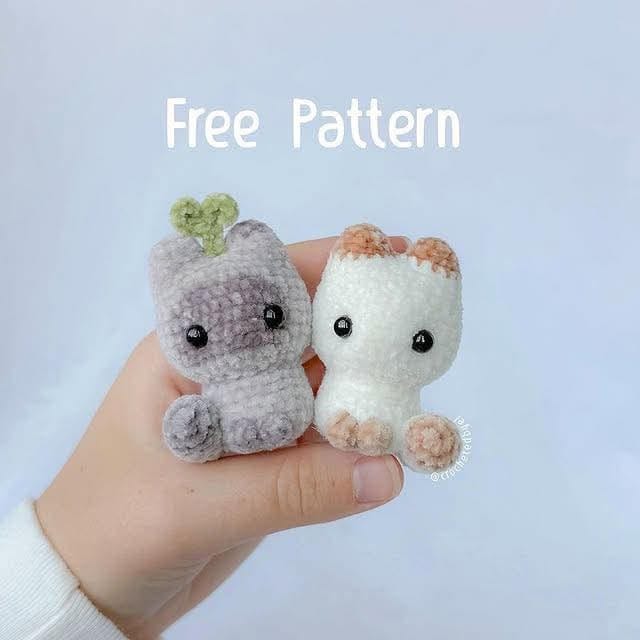
Unlock Your Creativity: How to Read a Crochet Pattern Like a Pro (Even If You’re a Beginner)
Are you ready to transform skeins of yarn into beautiful blankets, cozy scarves, or adorable amigurumi? Learning to crochet is an incredibly rewarding journey, but often, the first hurdle beginners face is deciphering those cryptic crochet patterns. They can look like a secret code of symbols and abbreviations!
Fear not! This comprehensive guide is designed to demystify the art of how to read a crochet pattern. Whether you prefer written instructions or visual diagrams, we’ll break down everything you need to know to confidently tackle your next project. We’ll cover essential stitch names, their abbreviations, common symbols, and what each stitch actually looks like. By the end, you’ll be able to pick any beginner-friendly pattern and know exactly what to do!
Prefer a visual walkthrough? Watch the accompanying video above for a step-by-step guide on reading crochet patterns!

Decoding Basic Crochet Stitches: Your Essential Glossary
Before we dive into full patterns, let’s get familiar with the building blocks of crochet: the basic stitches. You’ll encounter these frequently in almost every beginner crochet pattern. For each stitch, we’ll cover its full name, its common abbreviation, and its symbol in crochet diagrams.
1. Chain (ch)
- Full Name: Chain
- Abbreviation: ch
- Symbol: An open oval or small circle (looks like a link in a chain).
- What it Looks Like: A series of interconnected “V” shapes forming the foundation of most crochet projects. Each V-shape counts as one chain.
2. Slip Stitch (sl st)
- Full Name: Slip Stitch
- Abbreviation: sl st
- Symbol: A small solid dot or a very flattened oval.
- How it Works: Insert your hook into the stitch, yarn over, pull through the stitch, and then immediately pull through the loop on your hook. This stitch is often used to join rounds, move across stitches without adding height, or finish off work.
3. Single Crochet (sc)
- Full Name: Single Crochet
- Abbreviation: sc
- Symbol: A plus sign (+) or a small “X”.
- How it Works: Insert your hook into the stitch, yarn over, pull up a loop (you’ll have two loops on your hook), yarn over, and pull through both loops on your hook. This creates a dense, short stitch.
4. Half Double Crochet (hdc)
- Full Name: Half Double Crochet
- Abbreviation: hdc
- Symbol: A “T” shape.
- How it Works: Yarn over, insert your hook into the stitch, yarn over, pull up a loop (you’ll have three loops on your hook), yarn over, and pull through all three loops on your hook. This stitch is taller than an ‘sc’ but shorter than a ‘dc’.
5. Double Crochet (dc)
- Full Name: Double Crochet
- Abbreviation: dc
- Symbol: A “T” shape with one horizontal line through the vertical stem.
- How it Works: Yarn over, insert your hook into the stitch, yarn over, pull up a loop (three loops on hook), yarn over, pull through the first two loops (two loops on hook), yarn over, pull through the remaining two loops. This is a common and relatively tall stitch.
Putting Theory into Practice: Reading Real Crochet Patterns
Now that you know the basic stitches, let’s see how they come together in actual crochet patterns. Patterns typically come in two forms: written instructions or visual diagrams. Both convey the same information, just in different ways.
Understanding Written Crochet Patterns
Written patterns use abbreviations and plain language to guide you stitch by stitch. They are often very detailed, giving you specifics on turning chains, stitch counts, and special instructions.
Row 1: “Turn your work. Ch 2 (counts as first dc). Dc in 3rd ch from hook. *Sk next ch, ch 1, dc in next ch; repeat from * across. Dc in last ch.“
This translates to:
- Turn your work: Rotate your work so the back is facing you, and your hook is ready to begin the next row.
- Ch 2 (counts as first dc): Make two chain stitches. For this pattern, these chains stand in for your first double crochet stitch of the row.
- Dc in 3rd ch from hook: Count three chains away from your hook and make a double crochet stitch in that chain. This is often your “first stitch” of the row.
- *Sk next ch, ch 1, dc in next ch; repeat from * across: The asterisk (*) indicates a section to repeat. So, you’ll skip the very next chain, then chain one, then make a double crochet in the chain after that. You’ll keep doing this sequence until you reach the end of your row.
- Dc in last ch: Make one double crochet in the very last chain of your foundation row.
Written patterns provide clear, sequential instructions, making them excellent for precise stitch placement and understanding the overall structure.
Understanding Crochet Diagram Patterns
Crochet diagrams (sometimes called charts) are visual representations of a pattern. They use the symbols we learned earlier to show you exactly where to place each stitch. This can be incredibly helpful for visual learners and for understanding the “fabric” of the pattern.
- You’ll see a red dot indicating your starting point (usually the first chain).
- A row of open ovals (chains) shows your foundation chain.
- Row 1 is indicated by a number “1” and an arrow showing the direction of your work.
- You’ll see two open ovals (ch 2 turning chain) at the start of the row.
- A double crochet symbol (T with a line) will be placed in the third chain from the hook.
- Then, you’ll see an open oval (ch 1) followed by a blank space (skip a stitch), then another double crochet symbol. This visual clearly maps out the “skip one, chain one, double crochet” repeat.
Diagrams excel at showing you the spatial relationship between stitches, making it easy to identify where each stitch goes and how the pattern builds. This visual aid is paramount when learning how to read a crochet pattern, especially for intricate lace or stitch repeats.
Combining Written and Diagram Instructions
Many patterns, especially online or in books, provide both written and diagram instructions. This is the best of both worlds! You can use the written instructions for detailed steps and reference the diagram to confirm your stitch placement and visual flow.
Beyond the Basics: Tips for Crochet Pattern Mastery
Mastering how to read a crochet pattern is an ongoing journey. Here are some extra tips to help you succeed:
- Check Your Gauge: Don’t skip the gauge swatch! It tells you how many stitches and rows per inch your specific yarn, hook, and tension create. Matching the pattern’s gauge is crucial for your project to turn out the correct size.
- Read Through the Entire Pattern First: Before picking up your hook, read the pattern from start to finish. This helps you understand the overall construction, identify any unfamiliar stitches, and mentally prepare for the steps.
- Understand US vs. UK Terminology: Be aware that crochet terms differ between US and UK patterns. For example, a US ‘single crochet’ is a UK ‘double crochet’. Always check which terminology the pattern uses. (Check out a comprehensive Crochet Abbreviation & Terms Glossary for reference).
- Utilize Online Resources: Websites like Ravelry offer a vast database of free and paid patterns, often with helpful comments from other crocheters. Many yarn companies (e.g., Yarnspirations) also provide free patterns.
- Practice, Practice, Practice: The more you crochet and follow patterns, the more intuitive it becomes. Start with simple projects like dishcloths or scarves to build confidence.
- Don’t Be Afraid to Ask for Help: If you’re stuck, online crochet communities (like Reddit’s r/crochet or Facebook groups) are incredibly supportive and willing to help clarify confusing pattern instructions.
Ready to Hook Your Next Project?
Congratulations! You’re now equipped with the fundamental knowledge of how to read a crochet pattern, whether it’s in written form or a visual diagram. Understanding abbreviations, symbols, and how stitches translate from words to fabric will open up a world of creative possibilities.
Remember, every expert was once a beginner. Be patient with yourself, embrace the learning process, and most importantly, have fun with your yarn! What will be the first pattern you confidently tackle?
Happy Crocheting!